
Yemeni Aqeeq vs Iranian vs Local: Telling Them Apart
By Ali Raza · Updated 10 November 2026
Ask for Aqeeq in any bazaar in Lahore or Karachi and the first question back is usually "Yemeni chahiye ya Irani?" Origin names carry a lot of weight with Aqeeq buyers, and prices follow them. The trouble is that most of these labels are trade descriptions, not tested facts. This guide compares Yemeni Aqeeq, Iranian Aqeeq and locally sold material on the things you can actually see, colour, translucency, banding and signs of dyeing, and explains what an origin label can and can't tell you.
What is Aqeeq, and why does origin matter to buyers?
Aqeeq is the trade name for agate and carnelian, both forms of chalcedony, a fine-grained quartz rated about 6.5 to 7 on the Mohs scale. Origin matters to buyers mostly for reasons of tradition and belief. Many Muslim families value Aqeeq from Yemen in particular, and that preference has shaped prices in Pakistan for generations.
For many people, wearing Aqeeq is tied to religious tradition, family custom or a gift after a pilgrimage. Those are matters of belief and personal meaning, and we describe them that way. The stone itself is the same mineral wherever it's mined; what changes from one deposit to another is colour, texture and how the material has been treated.
Yemeni, Iranian and local Aqeeq side by side
The table below gives the tendencies the trade usually describes. Treat it as a guide to what sellers mean, not as a test. Plenty of stones from each source fall outside these patterns, and some sellers use the names loosely.
| Feature | Yemeni (as the trade describes it) | Iranian (as the trade describes it) | Local and imported "desi" material |
|---|---|---|---|
| Typical colour | Deep red, liver-red ("kaleji"), brownish red, also honey and white | Orange-red to red, often lighter and warmer in tone | Wide range, from pale grey to bright red, often uneven |
| Translucency | Translucent to semi-opaque, with a soft glow against light | Often more translucent, light passes through easily | Varies widely; very even, glassy translucency can point to treatment |
| Banding | Subtle, cloudy or faint bands; many stones look almost solid | Fine bands or gentle colour zoning | Often clearly banded; sharp straight stripes are common in dyed stock |
| Surface and lustre | Fine, waxy to glassy polish | Glassy polish | Depends on cutting quality |
| Common treatment | Some heating; dyeing less often claimed | Heating common | Heating and dyeing both common |
| Price in the trade | Highest, driven by demand | Middle | Lowest to middle |
"Local" is the loosest label of the three. In Pakistan it can mean agate from within the country, or material from India, Brazil or Uruguay that's been cut locally. It isn't a quality grade, and a well-chosen local stone can look better than a poor stone sold as Yemeni.
Can you tell Yemeni Aqeeq by eye?
Not with certainty. An experienced eye can say a stone looks like the material usually sold as Yemeni, but colour, translucency and banding overlap between sources. Laboratories rarely give an origin for agate at all, so in practice the label rests on the seller's sourcing and honesty. Pay a Yemeni premium only to a seller you trust.
That's an uncomfortable answer for a stone where origin drives the price, but it's the honest one. A seller who claims to tell Yemeni from Iranian Aqeeq at a glance, every time, is overstating what anyone can do.
Reading colour and translucency
Hold the stone up to daylight or a small torch. Natural chalcedony usually lets light through softly, with a cloudy or slightly milky glow, and the colour sits evenly through the body rather than on the surface. Deep red and liver tones should look rich in daylight, not almost black. Very dark stones sometimes only show their red when a torch is held behind them.
Bright, candy-like reds, neon orange or a colour that looks the same from every angle are worth a closer look. Heated carnelian can be a strong, even red, and heating is common and stable, but it's a treatment and should be disclosed. Our red agate listings say whether colour is natural or enhanced where we know it.
How do you spot dyed Aqeeq?
Look for colour that pools in cracks, around the drill hole or along the bands. Dyed agate tends to show darker lines where dye has soaked deeper into porous layers, and the colour often looks too bright for a natural stone. A cotton bud with a little acetone on a hidden spot sometimes picks up colour from cheap dye, though good dyes won't come off.
Other signs of dyeing include:
- Unnatural colours sold as Aqeeq, such as electric blue, pink or bright green.
- Perfectly sharp, straight bands in strong contrasting colours, typical of dyed Brazilian agate.
- Identical stones in a tray, all the same shade. Natural Aqeeq varies from piece to piece.
- Colour concentrated near the surface, visible at a chipped edge where the inside is paler.
Dyed agate isn't fake. It's real chalcedony, coloured artificially, and it can make a pleasant ring at the right price. The problem is only when it's sold undisclosed at a natural-colour price. Our guide to checking real Aqeeq covers glass and resin copies as well.
Banding and texture under a loupe
A 10x loupe helps more than any origin label. Natural chalcedony shows a fine, fibrous or sugary texture and soft, wavy bands that follow the shape of the original cavity. Glass shows round bubbles and swirl marks instead. Resin feels warm and light. The banded black-and-white stones sold as Sulemani Aqeeq follow the same rules, and dyed black is very common in that variety too.
What should you ask a seller about origin?
Ask where the rough came from, who cut it, whether it's heated or dyed, and whether they'll put the origin and treatment in writing on the bill. A seller confident in a Yemeni claim should be comfortable writing it down. Also ask whether the return policy covers you if a later test shows dye.
At RareGems, every listing states the origin we can stand behind and any treatment we know of. Where the source can't confirm origin, we'd rather say so plainly than guess.
What we stock
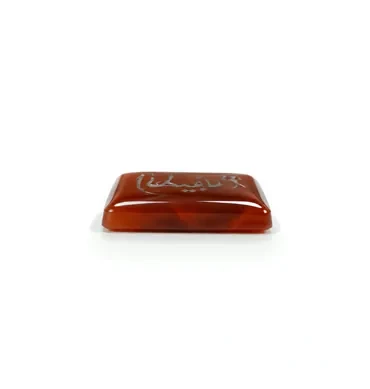
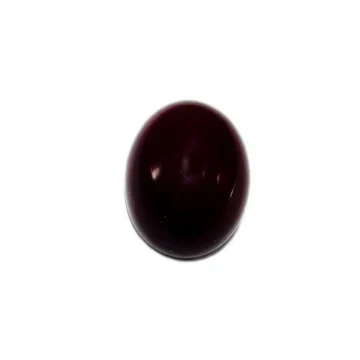
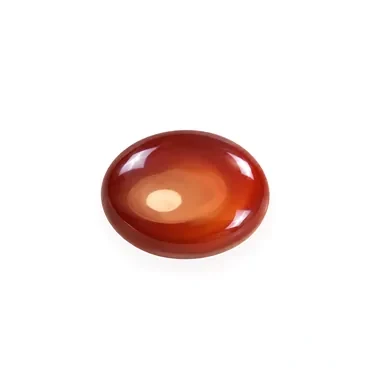
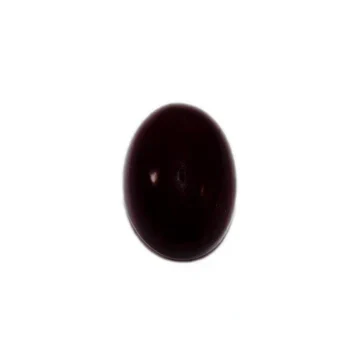
Our Aqeeq collection is small at the moment, a handful of individually photographed pieces, and we don't describe any of them as Yemeni unless the sourcing supports it. If you're looking for a particular colour or size, related stock is wider in red agate, yellow agate and black agate.
Browse: All Aqeeq · All Red Agate
Every stone goes through the same check described on how we grade. If you'd like an independent opinion on identity and treatment, any stone can be sent for a lab report on request, with the lab fee charged separately; see lab certified gemstones. If you're choosing Aqeeq on an astrologer's or elder's advice and aren't sure which colour or size to go for, book a gemstone consultation. For a ring, measure first with the ring size guide.
Delivery is within Pakistan only, by TCS or Leopards Courier, on Cash on Delivery with open-and-inspect. You can check the stone before paying, and our 7-day return covers you if it isn't what you expected.
خلاصہ
یمنی، ایرانی اور مقامی عقیق کا فرق زیادہ تر رنگ، شفافیت اور دھاریوں کے رجحانات سے بتایا جاتا ہے، مگر صرف آنکھ سے اوریجن یقینی طور پر نہیں پہچانا جا سکتا۔ رنگے ہوئے عقیق میں رنگ دراڑوں اور سوراخ کے گرد جمع نظر آتا ہے۔ اوریجن اور ٹریٹمنٹ ہمیشہ بل پر لکھوائیں اور صرف بھروسے والے بیچنے والے کو یمنی قیمت دیں۔