
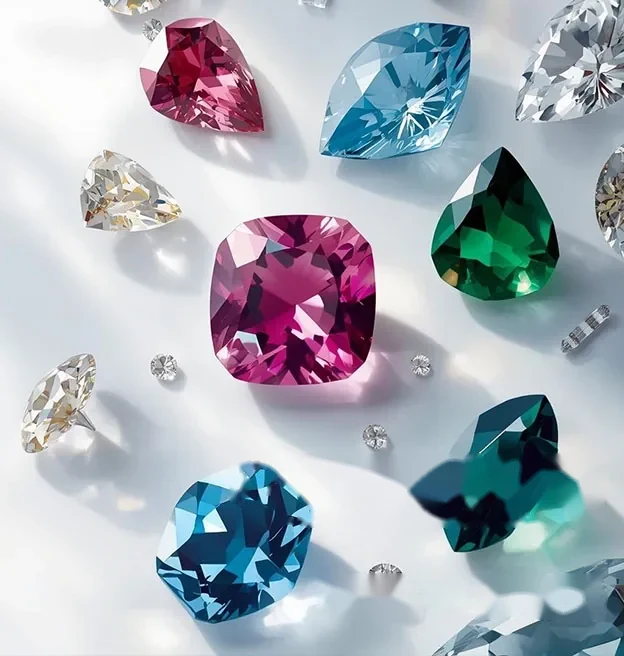
Many people in Pakistan buy a stone for a reason beyond its looks. A grandmother suggests Feroza for a child, an astrologer recommends Pukhraj, or someone simply wants a Dur-e-Najaf for prayer. These pages group gemstones by purpose, following the associations found in Islamic, South Asian and Vedic tradition and in wider folk custom.
We describe what tradition says. We don't claim any stone changes anyone's health, fortune or relationships, and we'd rather you buy a stone you like the look of, at a fair price, than one sold on promises.
Where do these traditional associations come from?
They come from several sources: Vedic astrology, which links nine gems to nine planets; Islamic and South Asian custom around stones such as Aqeeq, Feroza and Dur-e-Najaf; and older Persian, Greek and folk beliefs about colour. The same stone can carry different meanings in different traditions, so each page notes which tradition it is quoting.
Six traditional themes
- Protection and well-being: dark and banded stones such as black agate, Sulemani agate and Feroza.
- Confidence and success: warm reds and yellows such as ruby and citrine.
- Love and harmony: soft stones such as moonstone, pearl and kunzite.
- Calm and focus: cool blues and purples such as amethyst and aquamarine.
- Wealth and prosperity: green and yellow stones such as yellow sapphire and jade, described as tradition only.
- Spiritual reflection: Dur-e-Najaf, Aqeeq and lapis lazuli.
Should I ask an astrologer first?
If you're buying a stone on astrological grounds, yes. Vedic practice ties gems to a person's chart, and two people can be advised different stones. Our gemstones by rashi guide and zodiac gemstones pages explain the system. If you're buying for colour or as a gift, you can shop freely by colour instead.
Koi bhi pathar pehnne se pehle apne astrologer ya buzurg se mashwara kar lein. We'll help with the stone; they can help with the choice.