
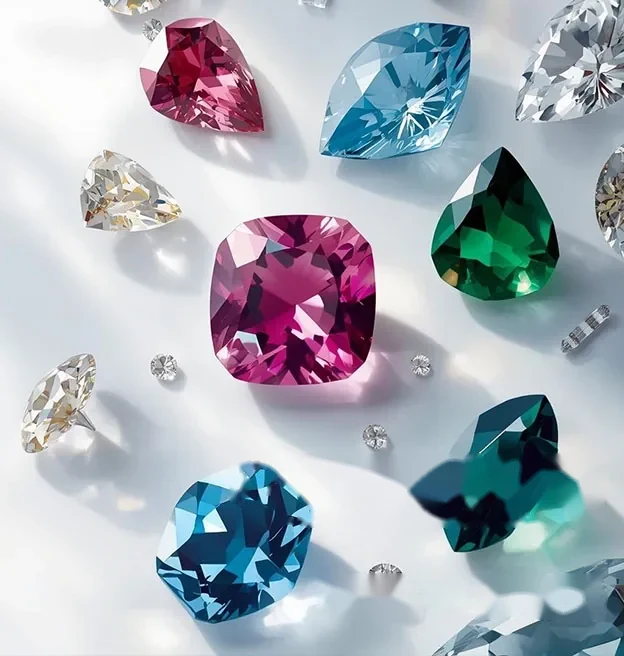
Before any stone goes on sale at RareGems it goes through the same check. It's not a lab report, and we never pretend it is, but it's the reason a listing tells you what you're actually buying. This is how we grade gemstones in practice: the RareGems check, step by step, in the order it happens.
- Weighing. Each stone is weighed in carats, and the weight on the listing is the weight of that stone, not a parcel average. We show ratti alongside where buyers expect it.
- Loupe inspection. We examine the stone under magnification for inclusions, chips, abrasions, gas bubbles and other signs that point to glass or a synthetic.
- Daylight inspection. Colour is judged in natural daylight, because shop lighting and LED bulbs can make blue look bluer and red look redder than they are.
- Origin and treatment notes. We write what we know about treatment on the listing in plain words. We name an origin only when a lab report or a supplier document backs it; otherwise the listing says "Origin: not documented".
- Individual photography. Every stone is photographed on its own, in natural light, so the picture you see is the stone you'll receive.
- Pricing. Finally, we set a per-carat rate from everything above.
Why do you photograph every stone individually?
Because two stones from the same parcel can look quite different. Stock photos hide the inclusions, colour zoning and cut of the stone you're actually buying, so we photograph each one in natural light. Screens vary a little, so if the colour isn't what you expected when the parcel arrives, our 7-day return covers it.
What we look for under the loupe
A loupe shows the inside of a stone. Natural stones usually carry small crystals, needles, fingerprints or feathers. Glass often shows round gas bubbles and swirls, and some synthetics show curved growth lines. We also check the surface for chips and polish quality, because a chipped girdle matters if you're having the stone set in a ring. If a stone raises doubts we can't settle, it doesn't go on the shop as described; it goes for testing or back to the supplier.
How is the per-carat price set?
We start from the going trade rate for the species and size, then adjust for colour, clarity, cut, treatment and any documented origin. A larger stone of the same quality usually costs more per carat, not just more in total. The listing shows the rate and weight, so you can see how the total was reached and compare stones fairly.
In practice, colour carries the most weight for coloured stones. A bright, even Neelam will sit well above a dark or patchy one of the same weight, and a clean Zamurd costs far more than a heavily included one. For opal, play of colour leads. Our price guide shows indicative ranges, and the live price index tracks our own listings.
What the check doesn't do
Our inspection can't confirm a stone's country of origin or prove it is unheated; only a lab can. That's why we offer an independent report on request. The difference is explained on our lab certified gemstones page, and you can read about treatment in heated vs unheated.
Want to see it for yourself? With Cash on Delivery you can open the parcel and check the stone before paying, and our authenticity page sets out what protects you if it isn't as described.