
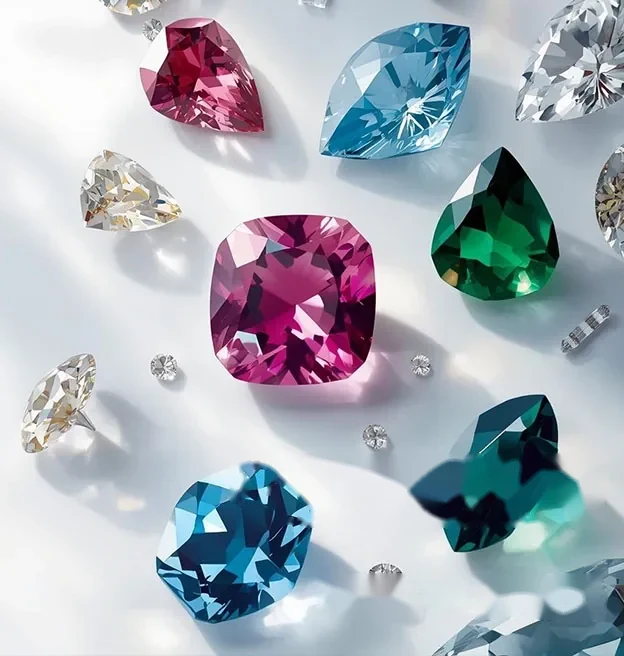
A lab report is the strongest evidence a buyer can have about a stone. It's written by a testing laboratory that has no interest in the sale, and it describes one specific stone. This page explains what lab certified gemstones are, what a report does and doesn't tell you, and how to get one through RareGems.
What is an independent gem lab report?
It's a written document from a gem testing laboratory that identifies one specific stone. The lab examines the stone with gemmological instruments and states what it is, whether it's natural or synthetic and any treatment it detects. Because the lab isn't the seller, the report gives you a second, independent opinion. Most buyers in Pakistan still say "certificate" for it.
What a report usually states
- Identification, such as "natural corundum" for Neelam or "natural beryl" for Zamurd.
- Natural or synthetic.
- Treatment detected, for example "heated" or "no indications of heating", or the degree of oil in an emerald.
- Weight, measurements, shape and cut, and colour.
- Usually a photograph and a report number you can check with the lab.
- Origin, only on some reports and usually at extra cost. Origin is the lab's opinion based on testing.
Which labs do Pakistani buyers use?
Broadly, two kinds. International laboratories such as GIA and GRS are widely recognised and are the usual choice for high-value sapphire, ruby and emerald, especially where origin or "no heat" matters. Local gem testing labs in Pakistan's larger cities are quicker and more affordable, and are a sensible choice for identification and basic treatment checks on everyday stones.
We don't have a partnership with any laboratory, and we don't name labs against particular stones unless a report exists. When you request a report, we'll talk you through which kind suits the stone and your budget.
RareGems inspection, RareGems certificate or lab report?
| RareGems inspection | RareGems certificate (on request) | Independent lab report (on request) | |
|---|---|---|---|
| Who issues it | RareGems, before listing | RareGems | A third-party laboratory |
| Which stones | Every stone | Any stone you buy | Any stone you request it for |
| What it covers | Weight, loupe and daylight check, treatment notes (origin only when documented) | Our written record of the stone's identity, weight and known treatment | Identification, natural or synthetic, treatment and sometimes origin, from lab testing |
| Independent? | No | No | Yes |
Our inspection is described step by step in how we grade. It's a good check, but it's ours, and for an expensive or unheated stone you should want someone else's opinion too.
How to request a lab report through RareGems
- Choose the stone and message us before you order, with the listing link.
- Tell us what you need confirmed: identity and treatment, or origin as well.
- We'll confirm the lab type, the fee and the expected time, then send the stone for testing.
- The stone ships to you with the report, on the usual Cash on Delivery terms.
Lab certificate on demand. Any stone can be sent for an independent lab report when you ask. The lab fee is charged separately, on top of the stone's price, and we confirm the fee with you before the stone goes to the lab.
Lab certified stones in stock
Stones already carrying a report are tagged and appear above. Reports matter most for Neelam, Yaqoot, Pukhraj and Zamurd, where heating, oiling and lab-grown look-alikes are common. Read heated vs unheated for why treatment changes the price, gemstone origins for why origin needs a report, and authenticity at RareGems for what happens if a lab disagrees with our listing. Many reported stones also qualify as Rare Finds.