
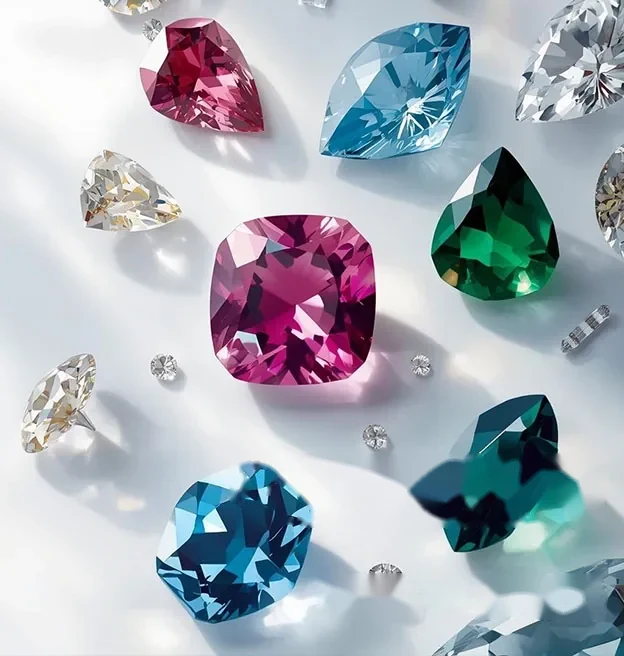
Most stones in our shop are good, honest examples of their kind. A small number are rare gemstones in the strict sense: an unheated Neelam with its treatment status documented, a Zamurd with a named mine behind it, or a Pukhraj big enough that the trade calls it a collector size. We tag those stones as Rare Finds so they're easy to find, and this page explains exactly what earns the tag.
What makes a stone a RareGems Rare Find?
A stone qualifies when at least one rarity fact about it is documented, not just claimed. That means it is confirmed unheated or untreated by an independent lab report, it has a named origin with paperwork, it sits above our size threshold for its category, or it comes with an independent lab report. One documented fact is enough; many stones carry two or three.
- Unheated or untreated, confirmed by a lab. Most sapphire and ruby is heated, and our listings say "not lab-tested" unless a report says otherwise. A stone a laboratory has confirmed as unheated is a different class of stone. Our heated vs unheated guide explains why.
- Named origin with documentation. "Ceylon" or "Swat" only counts when there's a lab report or traceable source paperwork behind it. Trade origin on its own doesn't qualify. See where your stone comes from.
- Above the size threshold for its category. Fine material gets scarcer quickly as weight goes up, so a clean stone over the threshold below qualifies.
- An independent lab report. A report from a recognised laboratory for that exact stone. Read more on our lab certified gemstones page.
Size thresholds by category
| Stone | Trade name | Rare Find threshold | Category |
|---|---|---|---|
| Blue sapphire | Neelam | 5 ct and above | Sapphire |
| Yellow sapphire | Pukhraj | 7 ct and above | Yellow sapphire |
| Ruby | Yaqoot | 3 ct and above | Ruby |
| Emerald | Zamurd | 2 ct and above | Emerald |
| Opal | Opal | 5 ct and above | Opal |
| Tanzanite | Tanzanite | 5 ct and above | Tanzanite |
| Aquamarine | Beruj | 10 ct and above, clean and well coloured | Aquamarine |
Size alone isn't enough for a cloudy or badly cut stone. A stone over the threshold still has to be a good example of its kind, with even colour and a cut that shows it off.
Rare Finds in stock now
The selection changes as stones sell. If the grid is thin today, tell us what you're after and we'll let you know when something suitable is listed.
What "rare" does not mean at RareGems
Our brand line is "Rare by nature. Honest by choice." The second half matters as much as the first, so here is what the Rare Find tag never implies:
- It isn't a promise about future price. We describe scarcity as a fact about supply today and make no forecast about what a stone will be worth later.
- It isn't a claim of astrological strength. A bigger or unheated stone carries the same traditional associations as any other stone of its kind.
- It isn't a sales label for a slow seller. A stone gets the tag for a documented reason, and the listing names that reason.
- It isn't "one of a kind" hype. Every natural stone is unique; that alone doesn't make it a Rare Find.
Is a Rare Find always more expensive?
Usually, yes, because the facts that qualify a stone are the same ones the market pays for. An unheated Neelam or a large clean Pukhraj typically costs more per carat than a heated or smaller stone of similar colour. The price on each listing is the per-carat rate times the weight, so you can compare it fairly with the rest of our stock.
For a wider view of what drives scarcity, read what makes a gemstone rare, or check current ranges in our Pakistan price guide. Every Rare Find is covered by the same Cash on Delivery, open-and-inspect and 7-day return terms as the rest of the shop, and our authenticity page explains how we check every stone.