
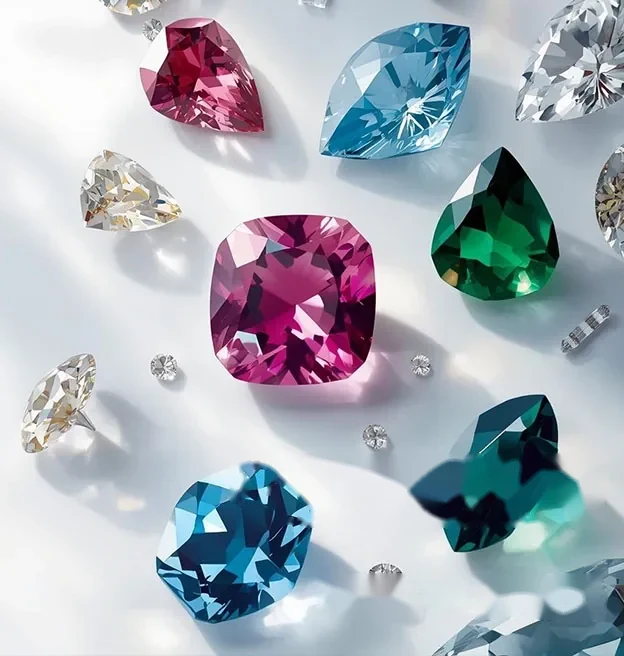
"Ye pathar kahan ka hai?" is one of the first questions buyers ask us, and it's a fair one. Gemstone origin shapes how a stone looks, how the trade talks about it and, for some stones, what it costs. Pakistan sits beside some of the world's best-known deposits, and Lahore's trade also brings in stones from Sri Lanka, Myanmar, East Africa, Iran and Yemen. Here is where the main stones come from, and what an origin on a listing really means.
Stones from Pakistan and Afghanistan
The mountains of northern Pakistan and neighbouring Afghanistan produce a remarkable range of gem minerals, much of it mined by hand in small workings and traded through Peshawar.
- Swat emerald. Mined near Mingora in the Swat Valley. Swat Zamurd tends to be small, with a deep, slightly bluish green and plenty of inclusions.
- Panjshir emerald. From the Panjshir Valley in Afghanistan. Fine Panjshir stones can be very clean and bright, and the trade ranks them highly.
- Hunza ruby and spinel. Both grow in marble in the Hunza Valley. Hunza Yaqoot is usually small, pinkish to red and often included. We don't currently stock spinel.
- Gilgit-Baltistan aquamarine, topaz and tourmaline. The pegmatites around Shigar and Skardu give long, clean Beruj crystals, topaz and tourmaline in several colours.
- Peridot from Kohistan. The high Sapat area of Kohistan, next to Gilgit-Baltistan, is known for large, clean Zabarjad of a strong olive green.
- Afghan lapis and kunzite. Lajward has come from Sar-e-Sang in Badakhshan for thousands of years. Pink kunzite comes from the pegmatites of Nuristan and Laghman.
Stones the trade imports
Some stones simply aren't mined in this region, or the best material comes from elsewhere. These are the imported origins you'll see most often in Pakistan:
- Ceylon sapphire from Sri Lanka: light to bright blue Neelam and much of the good Pukhraj.
- Burmese ruby from Mogok in Myanmar, the classic name for deep red Yaqoot, and Mozambique ruby, now a major source of clean red stones.
- Iranian Feroza from the Nishapur area, the traditional standard for sky-blue turquoise.
- Yemeni Aqeeq, the agate long valued in South Asian and Arab tradition.
- Ethiopian opal, mostly light-bodied with strong play of colour, and Australian opal, the long-established source.
- Tanzanian tanzanite, found commercially only in the Merelani Hills near Arusha.
Origin, stone and where to shop
| Origin | Stone | Shop the category |
|---|---|---|
| Swat, Pakistan | Emerald (Zamurd) | Emerald |
| Panjshir, Afghanistan | Emerald (Zamurd) | Emerald |
| Hunza, Pakistan | Ruby (Yaqoot) | Ruby |
| Hunza, Pakistan | Spinel | Not in stock |
| Gilgit-Baltistan, Pakistan | Aquamarine (Beruj) | Aquamarine |
| Gilgit-Baltistan, Pakistan | Topaz | Topaz |
| Gilgit-Baltistan, Pakistan | Tourmaline | Tourmaline |
| Kohistan, Pakistan | Peridot (Zabarjad) | Peridot |
| Badakhshan, Afghanistan | Lapis lazuli (Lajward) | Lapis lazuli |
| Nuristan and Laghman, Afghanistan | Kunzite | Kunzite |
| Sri Lanka | Blue sapphire (Neelam) | Sapphire |
| Sri Lanka | Yellow sapphire (Pukhraj) | Yellow sapphire |
| Myanmar and Mozambique | Ruby (Yaqoot) | Ruby |
| Iran | Turquoise (Feroza) | Feroza |
| Yemen | Agate (Aqeeq) | Aqeeq |
| Ethiopia and Australia | Opal | Opal |
| Tanzania | Tanzanite | Tanzanite |
Why does a gemstone origin claim need a lab report?
Because origin can't be seen with the eye or a loupe. Stones from different countries can look almost identical, and a lab decides origin by studying inclusions and trace-element chemistry with specialised instruments. Without that report, an origin is the seller's opinion, however honest. For costly stones, only a report from a recognised laboratory turns it into documented fact.
That's also why "Kashmiri Neelam" and "Burmese Yaqoot" get used so loosely in bazaars. Our sapphire origin guide goes into the detail for Neelam, and understanding rubies does the same for Yaqoot.
What does the origin on a RareGems listing mean?
We name an origin on a listing only when a lab report or a supplier document backs it. None of the stones we have right now comes with such a document, so every listing reads "Origin: not documented" and no price includes an origin premium. When a stone does arrive with a report stating its origin, its listing will say so and name the lab. If origin matters to you, ask for an independent report before ordering and we'll arrange one; the lab fee is charged separately.
Stones with documented origin can qualify as Rare Finds, and our lab certified gemstones page explains how reports work. Browse everything in the shop, or read how we grade each stone before it's listed.