
Emerald Origins: Swat, Panjshir, Zambia and Colombia Compared
By Ali Raza · Updated 5 November 2026
Ask a Peshawar dealer where an emerald is from and you'll usually get an answer within seconds. Ask a gem laboratory the same question and it may take a week, several instruments and a careful comparison with reference stones. That gap is the subject of this guide. Emerald origins matter to buyers in Pakistan more than for most gems, because one of the world's well-known sources sits in our own Swat valley and another lies just across the border in Afghanistan's Panjshir.
Below we compare the four origins Pakistani buyers ask about most, explain what each one typically looks like, and set out why a confident origin claim needs paperwork. If your real question is whether a stone is natural at all, start with our separate guide on how to check real emerald; this page assumes the stone is genuine and asks where it grew.
Why do emerald origins look different?
Emerald needs chromium or vanadium, which sit in dark rocks, to meet beryllium, which sits in pale granitic fluids. That meeting happens in very different geology from one deposit to the next. Swat and Zambia formed in schist near igneous intrusions, while Colombia formed in black shale through hot brines. Each setting leaves its own chemistry and inclusions behind.
Iron is the other variable. More iron pulls the green towards blue and cools the colour, while low-iron stones tend to look warmer and purer. That single difference explains a lot of what dealers mean when they say a stone "looks Zambian" or "looks Colombian".
Swat emerald: Pakistan's own Zamurd
The Swat mines around Mingora have been worked for decades and produce some of the most intensely coloured emerald anywhere. The crystals are usually small, so cut stones of a carat or less are the norm, and clean pieces above two or three carats are scarce. The colour is a strong, slightly bluish green with high saturation, a result of unusually high chromium content.
- Typical look: deep, bright green in small sizes, often with a fine-grained, slightly sleepy texture.
- Common inclusions: dark chromite grains, carbonate crystals, mica flakes and small fluid pockets.
- Oiling: common, because many Swat stones are fractured. Ask how much.
Are Swat emeralds always small?
Mostly, yes. The host rock at Swat tends to produce small, heavily included crystals, so the typical cut Swat emerald weighs under one carat. Larger clean stones do appear, but they're rare enough that dealers set them aside. If someone offers a large, clean "Swat" stone cheaply, ask for a lab report before paying anything.
Panjshir emerald: close to Colombian
Panjshir stones from Afghanistan reach Pakistani buyers mainly through Peshawar. They're prized because their geology resembles Colombia's more than any other Asian source, and the best of them have the same bright, slightly bluish green with a lively glow. Sizes are generally larger than Swat, and clean stones of several carats do come out of the valley.
Panjshir emerald can show jagged fluid inclusions with a gas bubble and a tiny salt crystal, the so-called three-phase inclusion often linked with Colombia. That overlap is exactly why even experienced dealers mix the two up, and why laboratories rely on trace-element chemistry rather than inclusions alone.
Zambian emerald: cooler green, often cleaner
Zambia's Kafubu area is now one of the biggest producers of fine emerald in the world. Zambian stones are formed in iron-rich schist, which gives a deeper, cooler, bluish green and sometimes a slightly darker tone than Colombian material. Many buyers like that look; others find it a touch heavy indoors.
Why are Zambian emeralds often cleaner?
Zambian crystals tend to grow with fewer open fractures than Colombian or Swat material, so more of them can be cut into fairly clean stones in useful sizes. That usually means less oil is needed. Their typical inclusions are dark mica platelets and fine needle-like amphibole crystals rather than the jagged three-phase pockets associated with Colombia.
Colombian emerald: the warm classic
Colombia's Muzo, Coscuez and Chivor mines set the reference point that every other source is compared with. The classic Muzo colour is a warm, pure grass green with very little blue, and Chivor tends slightly bluer. Colombia is also the home of trapiche emerald, which shows a six-spoked pattern of dark lines and is collected as a curiosity.
Colombian stones are frequently fractured, so oiling is routine, and the degree varies enormously from stone to stone. Three-phase inclusions are the textbook Colombian feature, though, as noted above, Panjshir stones can carry them too.
How the four emerald origins compare
| Origin | Typical colour | Typical cut sizes | Common inclusions | Oiling |
|---|---|---|---|---|
| Swat (Pakistan) | Intense, slightly bluish green | Mostly under 1 ct | Chromite grains, carbonates, mica, small fluid pockets | Common, often moderate |
| Panjshir (Afghanistan) | Bright, slightly bluish green | 1 to several ct | Jagged three-phase and two-phase fluid inclusions | Common, varies |
| Zambia | Deeper, cooler bluish green | 1 to several ct | Mica platelets, fine amphibole needles | Often lighter |
| Colombia | Warm, pure grass green | All sizes | Jagged three-phase inclusions, pyrite, calcite | Routine, minor to significant |
Treat this table as a description of tendencies. Every source produces stones that break its own pattern, and a single gem can fit two rows at once.
Does oiling differ by origin?
Oiling depends more on the individual stone than on the country. Heavily fractured material from any source gets more filler, and Colombian and Swat stones are often more fractured than Zambian ones. Labs report the degree as none, minor, moderate or significant. Ask the seller to write the treatment level on the invoice, whatever the stated origin.
Cedarwood oil is the traditional filler; resins are also used. Both are accepted when disclosed, but heavy filling can dry out or cloud over years, so a stone with minor filling holds its look more reliably. Our guide to heated and unheated stones explains how treatment disclosure works across gems.
Can you tell an emerald's origin by eye?
Not reliably. Colour and inclusions give hints, but sources overlap, and a Panjshir stone can look Colombian while a dark Colombian stone can look Zambian. Laboratories combine microscopy, spectroscopy and trace-element chemistry, then compare the results with reference samples. Even then, the report states an opinion, and some stones are left as "origin undetermined".
That's why an origin claim without a report is a story, not a fact. It may be a true story, and many dealers know their goods well, but a name such as "Colombian" or "Swat" can add a noticeable premium, which gives sellers a reason to stretch it. Our gemstone origins guide covers how origin reports work for other gems too.
Buying emerald with an origin in mind
- Decide whether origin matters to you. Many buyers simply want a lively green; others want a Pakistani stone with a local story.
- Ask for treatment level first. It affects how the stone ages more than origin does.
- Request a report for any stone where origin raises the price. Without one, judge the stone on how it looks.
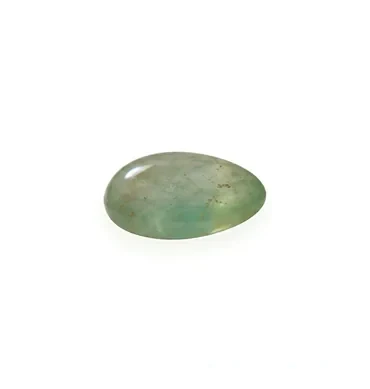
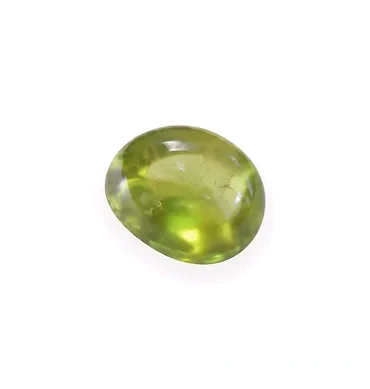
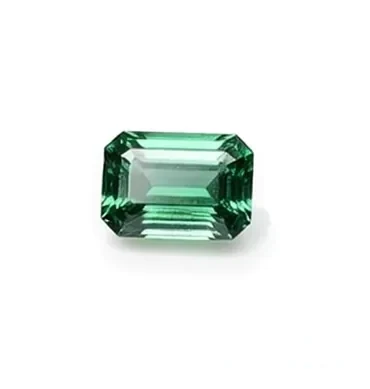
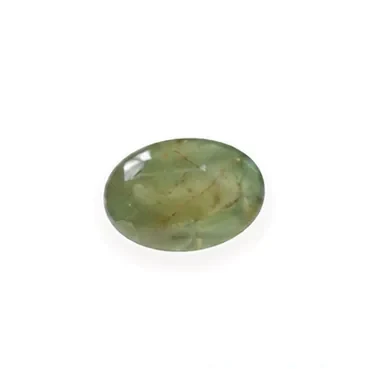
Every stone in our emerald collection is natural, priced per carat and listed with its treatment. If you'd like a different green, compare peridot (Zabarjad), which Pakistan's Kohistan region is known for, or green tourmaline. "Asli Zamurd kahan ka hai?" is a fair question to ask us on WhatsApp for any listed stone.
 Natural · Inspected
Browse: All Emerald · All Peridot · All Tourmaline
خلاصہ
سوات، پنجشیر، زیمبیا اور کولمبیا کے زمرد رنگ، سائز اور اندرونی نشانوں میں عموماً مختلف ہوتے ہیں، مگر یہ فرق ہمیشہ واضح نہیں ہوتا۔ تقریباً ہر زمرد میں تیل بھرا جاتا ہے، اس لیے ٹریٹمنٹ کی مقدار ضرور پوچھیں۔ کسی پتھر کے ماخذ کا پختہ دعویٰ صرف لیبارٹری رپورٹ سے ثابت ہوتا ہے۔
Ready to choose? Where every stone comes from