
Swat Emerald: Colour, Inclusions and What a Fair Price Looks Like
By Ali Raza · Published 30 October 2026 · Updated 16 November 2026
Pakistan doesn't have to import its most famous green stone. The hills around Mingora in the Swat Valley have produced emerald for more than sixty years, and Swat Zamurd has a look that dealers in Peshawar can often spot across a table: small, intensely green and full of character. This guide covers where Swat emerald comes from, the colours and inclusions to expect, why most pieces are small, how oiling works, and what a fair price looks like for the quality in front of you.
If your question is whether a green stone is emerald at all, start with our guide on how to check real emerald. If you want Swat compared with Panjshir, Zambia and Colombia, read identifying emeralds by origin. Here we stay with Swat and with buying sensibly.
Where do Swat emeralds come from?
From small deposits around Mingora in the Swat Valley of Khyber Pakhtunkhwa, with further workings at places such as Gujar Killi and in neighbouring Shangla. The Mingora deposit was found in the late 1950s and was later run for many years under state management. Much of the mining is still small-scale, in narrow workings cut into the hillside.
The geology explains a lot. Swat sits close to the line where the Indian plate pushed under the old Kohistan island arc, and that collision squeezed slivers of deep, chromium-rich rock up against rocks carrying beryllium. Hot fluids moved through the crushed zone, and where beryllium met chromium, green beryl grew inside soft talc and carbonate rock. That meeting happened in tight, fractured spaces, which is why Swat crystals tend to be small and full of tiny inclusions.
What colour is a typical Swat emerald?
A strong, saturated green with a slight bluish tint, often darker and more intense than many people expect from such small stones. The colour comes from unusually high chromium, helped by some iron. The best Swat pieces look like a deep green glow; lower grades look dark or a little grey, especially indoors under weak light.
Because the colour is so concentrated, Swat stones can look better small than large. A 0.40 carat Swat emerald can show more green than a much bigger pale stone from elsewhere. That's one reason many local buyers prefer Swat material for rings, and why it has a loyal following in Pakistan despite its modest sizes. When you look at one, check it in daylight by a window and again under a normal room bulb. A good stone keeps its green in both; a weak one goes inky or dull.
What sizes should you expect?
Mostly small. The majority of cut Swat emeralds weigh well under one carat, and many are under half a carat. Clean, well-coloured stones above one carat are uncommon, and anything above two or three carats with good clarity is scarce enough that dealers set it aside. A large, clean, cheap "Swat" emerald deserves a lab report before money changes hands.
| Cut size | How often you'll see it from Swat | What to expect |
|---|---|---|
| Under 0.5 ct | Very common | Strong colour, visible inclusions, often oiled |
| 0.5 to 1 ct | Common | Good ring sizes; eye-clean stones are already less common |
| 1 to 2 ct | Uncommon | Fine colour with moderate clarity is a good find |
| 2 ct and above | Scarce, especially clean | Ask for an independent lab report before paying |
For astrological wear, where a minimum weight is sometimes advised, this matters. A seller may offer a larger Panjshir or Zambian stone instead of Swat to meet a weight, and that's perfectly fine as long as the origin is described honestly. Our ratti vs carat guide explains how to convert an astrologer's ratti figure into carats before you shop.
Inclusions: the Swat "jardin"
Almost every Swat emerald has inclusions, and the trade calls this internal garden the jardin. Common features include tiny black grains of chromite, small carbonate and talc crystals, flakes of mica, fine fluid pockets and fractures that reach the surface. Under a loupe a typical stone looks busy, sometimes with a fine, slightly sleepy texture that softens the green.
That's normal and expected. What you want to avoid is inclusions that threaten the stone: a large open fracture running across it, or a chip at the girdle that could spread when the stone is set. Inclusions that mostly sit at the edge and leave the centre bright are far better than the same amount spread across the face. A perfectly clean Swat stone at a low price is a reason for more caution, not less.
Is Swat emerald usually oiled?
Yes, most of it is. Because Swat crystals are often fractured, cutters fill surface-reaching cracks with colourless oil or resin to make them less visible. Light oiling is routine across the emerald trade and accepted when disclosed. What changes the price is the degree: a lab report usually grades it as minor, moderate or significant.
Oiling is the emerald equivalent of heating in Neelam: a standard treatment that shapes price, as our heated vs unheated page explains for corundum. A few practical points follow from it:
- Ask how much. "Oiled" alone isn't enough; ask whether it's light, moderate or heavy, and get it written on the invoice.
- Keep it away from heat and solvents. Hot water, ultrasonic cleaners, steam and strong detergents can draw oil out of fractures, making them look more visible.
- Clean it gently. Lukewarm water, mild soap and a soft brush are enough.
- Re-oiling is possible. If an old stone starts to look dry, a jeweller can re-oil it, but it won't change the treatment grade on a lab report.
What does a fair price look like for Swat emerald?
It depends on colour, clarity, oil and size far more than on the Swat name. As indicative 2026 ranges, commercial included emerald often sits around Rs. 2,000 to Rs. 20,000 per carat, and good, lively stones with lighter treatment around Rs. 20,000 to Rs. 60,000 per carat. Fine, clean stones go well beyond that.
Those are wide bands because emerald quality varies so much. Within them, the price drivers work roughly in this order:
- Colour. A saturated, even green that holds up indoors carries most of the value. Too dark or too grey lowers it sharply.
- Clarity and oil. Eye-clean or nearly so, with minor oil, sits at the top. Visible fractures and heavy filling sit at the bottom.
- Size. Because larger fine Swat stones are scarce, the per-carat rate climbs steeply with weight.
- Cut. A well-proportioned stone that shows green across its face beats a lumpy one cut to save weight.
- Documented origin. A Swat origin confirmed by a lab adds a modest premium at the top end; a spoken claim adds nothing reliable.
A fair price, then, is one that matches the quality, not the label. Compare per-carat rates rather than totals, get the weight in carats, and check our gemstone prices in Pakistan guide for current indicative ranges. "Zamurd ki qeemat" asked without these details can only ever get a vague answer.
Does a Swat emerald need a lab report?
For a small, inexpensive stone, a careful visual check is often enough. For anything costly, bought for astrological wear, or sold with a strong origin claim, a report is worth the fee. It confirms the stone is natural rather than lab-grown, grades the oil and may give an origin opinion where the lab offers one.
Our lab certified gemstones page explains how reports work, and gemstone origins covers why an origin claim needs one.
Buying emerald from RareGems
Our emerald (Zamurd) stock is small at the moment, and we don't currently list stones as Swat origin. Each piece is photographed on its own, priced per carat and listed with what we know about its treatment, following the steps in how we grade. An emerald of 2 carats or more with documented facts can qualify as one of our Rare Finds.
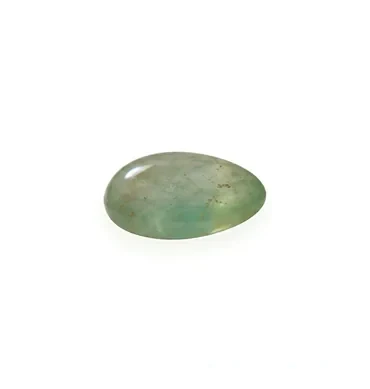
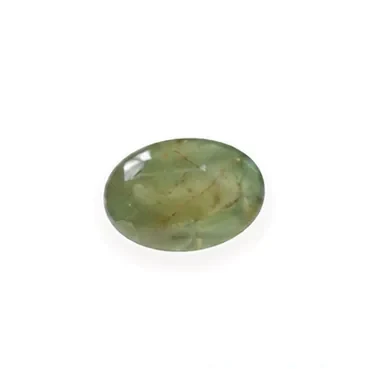
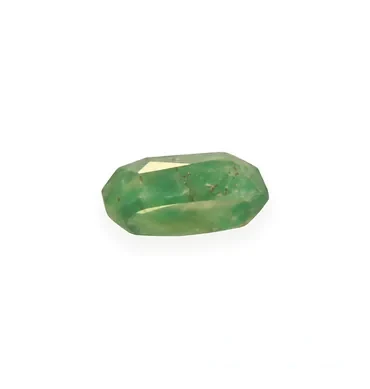
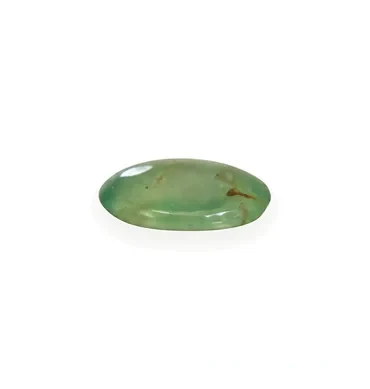
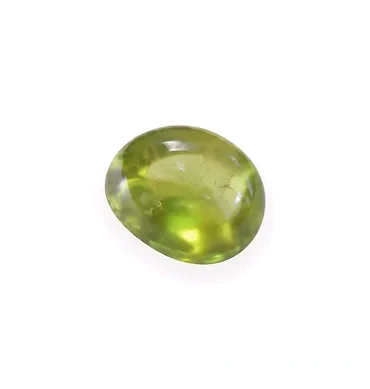
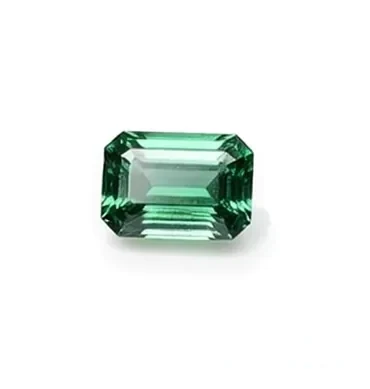
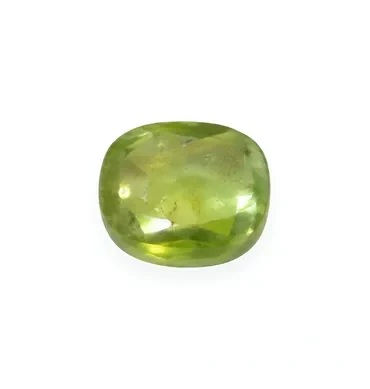
Any stone can be sent for an independent lab report on request, with the lab fee charged separately and confirmed before testing. Delivery is within Pakistan by TCS or Leopards Courier, with Cash on Delivery and a 7-day return window. If you'd like a green stone in a larger size or at a lower price, Kohistan's peridot (Zabarjad), green tourmaline and jade (Yashab) are worth a look.
 Natural · Inspected
Browse: All Peridot · All Tourmaline
خلاصہ
سوات کا زمرد گہرے، ہلکے نیلگوں سبز رنگ کا ہوتا ہے، عموماً ایک کیرٹ سے چھوٹا اور اندرونی نشانات سے بھرپور۔ زیادہ تر سوات زمرد کو تیل لگایا جاتا ہے، اس لیے بیچنے والے سے تیل کی مقدار ضرور پوچھیں۔ مناسب قیمت کا فیصلہ نام سے نہیں بلکہ رنگ، صفائی، وزن اور فی کیرٹ ریٹ سے کریں۔